
2026 Nissan Models That Are More Fuel-Efficient Than Their Competition
2026 Nissan Models That Are More Fuel-Efficient Than Their Competition
Posted on March 30, 2026
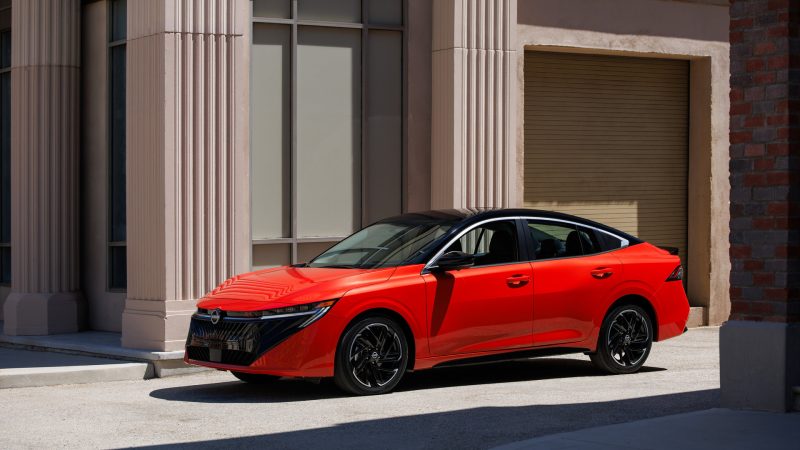
If you drive in Prince George, you know fuel economy matters. Highway runs to Vanderhoof, winter commutes through the Hart, trips up to Mackenzie - it all adds up. The 2026 Nissan lineup delivers some of the most efficient vehicles in their segments, and the numbers prove it.
Nissan's 2026 fuel economy ratings come from Natural Resources Canada (NRCan) - the same testing standard used across the country. These aren't marketing claims. They're verified consumption figures you can compare directly to competitors. Here's what stands out.
2026 Nissan Fuel Economy Ratings
The 2026 Nissan LEAF leads the efficiency conversation. Rated at 1.9 Le/100 km combined, it's one of the most efficient EVs in Canada. The 75-kWh battery delivers up to 488 km of range, and the NACS charging port means access to Tesla Superchargers and most public fast chargers. Charging from 10% to 80% takes 35 minutes at compatible stations.
The LEAF uses a 214-horsepower electric motor in the S+, SV+, and PLATINUM+ trims. The base S trim (late availability) pairs a 52-kWh battery with a 174-horsepower motor. All trims feature single-speed transmission and regenerative braking paddles.
The 2026 Nissan Sentra delivers 6.6 L/100 km combined - competitive for a compact sedan with a 2.0-litre engine producing 149 hp. City consumption sits at 7.3 L/100 km, highway at 5.9 L/100 km. The Sentra uses a continuously variable transmission (CVT) and runs on regular unleaded fuel.
The 2026 Nissan Versa returns 6.8 L/100 km combined (7.5 city, 5.9 highway). For a subcompact sedan, that's strong efficiency without sacrificing interior space or standard features.
The 2026 Nissan Kicks, a subcompact crossover, achieves 7.2 L/100 km combined (7.7 city, 6.6 highway). The 2026 Nissan Rogue matches that figure at 7.2 L/100 km combined (7.8 city, 6.5 highway) with standard Intelligent All-Wheel Drive across all trims.
The 2026 Nissan ARIYA, Nissan's electric crossover, delivers 2.4 Le/100 km combined with up to 465 km of range. It's positioned as a family-friendly EV with more cargo space than the LEAF and available all-wheel drive.
2026 Nissan Fuel Economy Summary
| Model | Combined (L/100 km or Le/100 km) | City | Highway |
| LEAF | 1.9 Le/100 km | - | - |
| ARIYA | 2.4 Le/100 km | - | - |
| Sentra | 6.6 | 7.3 | 5.9 |
| Versa | 6.8 | 7.5 | 5.9 |
| Kicks | 7.2 | 7.7 | 6.6 |
| Rogue | 7.2 | 7.8 | 6.5 |
Real-World Fuel Economy Expectations
NRCan ratings are tested in controlled conditions. Real-world consumption varies with driving habits, terrain, weather, and load. Highway speeds above 110 km/h increase consumption. Winter temperatures reduce EV range by 20-30% in moderate cold and up to 40-50% in deep cold snaps below -20°C.
For the LEAF, expect closer to 340-440 km of usable range in typical Prince George winter conditions. Preconditioning the cabin and battery while plugged in preserves range. Using seat and steering wheel heaters instead of blasting cabin heat helps maintain winter range.
For gasoline models like the Sentra and Rogue, expect city consumption to rise in winter due to longer warm-up periods and increased idling. Highway consumption stays closer to the rated figure if you maintain steady speeds.
Aggressive acceleration, frequent hard braking, and high speeds increase consumption across all powertrains. Smooth driving and moderate speeds deliver the best real-world efficiency.
Tips to Maximise Fuel Efficiency
For EVs like the LEAF and ARIYA, precondition the cabin and battery while plugged in. This shifts heating load to the grid instead of the battery and warms the pack so it delivers power more efficiently. Use seat and steering wheel heaters instead of cranking cabin heat - they consume significantly less energy.
Drive smoothly. Aggressive acceleration and high speeds increase consumption, especially in winter when the battery is cold. Testing shows range loss is significantly worse at 110-120 km/h than at moderate speeds, especially with heavy HVAC use.
Check tire pressure monthly in winter. Cold air lowers pressure, increasing rolling resistance and consumption. Proper winter tires improve traction and safety - efficiency-oriented winter tires with lower rolling resistance reduce the range penalty compared to aggressive snow tires.
For gasoline models, combine trips to reduce cold starts. A cold engine uses more fuel than a warm one. Avoid idling - modern engines warm up faster when driven gently than when left idling.
Remove roof racks and cargo carriers when not in use. Aerodynamic drag increases fuel consumption at highway speeds. Keep the vehicle as light as practical - extra weight increases consumption, especially in city driving.
The Nissan Lineup Delivers Efficiency Without Compromise
The 2026 Nissan lineup proves you don't have to sacrifice space, features, or capability to get strong fuel economy. The LEAF and ARIYA lead the electric segment with competitive range and charging infrastructure access. The Sentra, Versa, Kicks, and Rogue deliver efficient gasoline options for buyers who aren't ready to go fully electric.
If you're comparing fuel economy across segments, the numbers are clear. Nissan's 2026 models rank among the most efficient in their classes, and the real-world driving experience backs up the ratings.
Explore the 2026 Nissan lineup at Northland Nissan in Prince George. Our team can walk you through the fuel economy figures, charging options for EVs, and how each model fits your driving needs.